Sometimes the healthiest choice isn't changing who we are — it's learning to support who we're becoming.
If you had met me in the 1980s, you would have found me doing exactly what many women were doing back then — embracing big hair.
As a teenager, my hair was naturally somewhere between straight and wavy, which made it the perfect candidate for the piggyback perms that were so popular at the time. Every six months or so, I'd sit in a salon chair for hours and happily pay for more curls, more body, and more volume. Back then, bigger was better. And honestly... I loved it.
But then styles changed. The era of big hair and the infamous wall-of-bangs gave way to sleek blowouts, flat ironing and perfectly smooth hair. Suddenly, the goal wasn't volume — it was smooth hair and control. Like many of you, I spent years trying to make my hair fit the latest trend.
Stylists often suggested shorter cuts or long layers, keratin treatments and Brazilian blowouts. I tried many of them. The problem was that my hair never seemed interested in cooperating. I eventually realized that my hair needed the extra weight. Longer hair helped keep it manageable by weighing it down. No matter how beautiful a salon blowout looked, it never lasted long. By midday, the frizz would return.
So I did what I've done most of my adult life. I kept my hair long, embraced updos and scrunchies, and got a trim every few months to ward off split ends. Basically, I accepted that my hair was never going to be tamed.
What worked for my hair in my twenties and thirties — and even much of my forties — wasn't necessarily what worked in my fifties. This time, I noticed more dryness, frizzy curls and dare I say… grey hair. The products and routines I relied on for years no longer produced the same results.
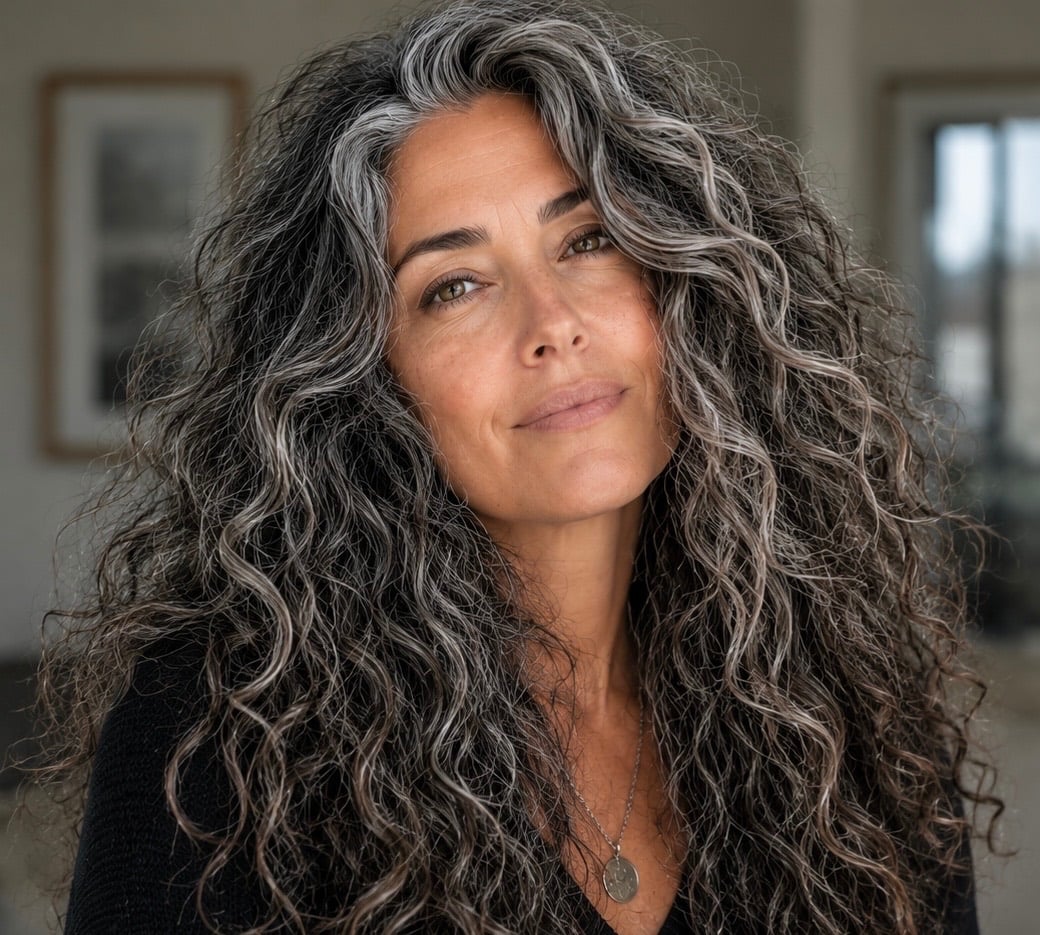
Now in my late fifties, the changes have continued to evolve. My frizzy grey hair has given way to tighter curls underneath and more waves and frizz on top. The silver and charcoal-gray strands growing in have a different texture — very coarse and unruly. It had simply become different.
About a year ago, I decided to stop chasing trends. For years, I colored it, let the gray grow back in, colored it again — rinse and repeat. I realized I was constantly chasing something I could never achieve. Instead of coloring over my grey, I decided to embrace it. And with that, I learned I also had to embrace the new texture.
What surprised me most when I stopped fighting that uphill battle was that I actually loved my natural color and texture — with all its unruly flaws. No blow dryers or flat irons. Better products. More acceptance.
And then I realized something that made me smile. The very thing I spent good money creating in my teens and twenties — body, volume and texture — had naturally returned. Only this time, I wasn't paying for it.
What started as a decision to embrace my gray hair became something much bigger. It became a lesson about aging. Healthy aging isn't about giving up on ourselves. It's not about deciding we no longer care. It's about recognizing that we need to evolve and adapt to these changes instead of fighting them.
Our skin changes. Our hair changes. Our bodies change. Our priorities change. The goal isn't to become the person we were thirty years ago. The goal is to care for the person we are today.
At Off The Vine Day Spa, I encourage my clients to choose consistency over quick fixes and wellness over perfection. My hair journey reminded me that the same philosophy applies far beyond skincare. I still care about my appearance — but it doesn't consume me. The difference is that I'm no longer trying to make my hair into something it isn't.
Perhaps that's one of the unexpected gifts of aging. It's not about learning how to look younger. It's about learning how to appreciate ourselves exactly as we are, today.